Blog
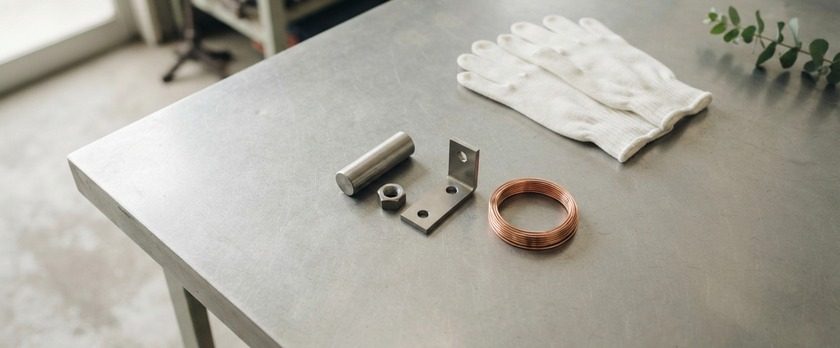
Among the 3,012 foreign nationals with Specified Skilled Worker (i) Status of Residence working in Miyazaki Prefecture, the Manufacturing Industry (Industrial Products) sector accounts for 140 people (approx. 4.6%), making it the 7th largest sector. Nationally, the Manufacturing Industry (Industrial Products) is the 3rd largest sector (56,736 people, comprising 14.8%), following the Food and Beverage Manufacturing Industry and Nursing Care. Therefore, its proportion in Miyazaki remains at approximately one-third of the national figure. Miyazaki Prefecture also ranks 41st out of 47 prefectures. Conversely, this indicates that many manufacturing companies within the prefecture have only just begun utilizing Specified Skilled Worker. Furthermore, the Manufacturing Industry (Industrial Products) sector is characterized by more entry requirements compared to other sectors. These include completing membership in the Accepting Business Implementation Corporation (JAIM) “before applying to the Immigration Services Agency”, ensuring that the industrial classification of the business establishment falls under those specified in the public notice, and that employment is limited to direct employment, with worker dispatching not permitted. This article will first confirm the current situation in Miyazaki based on the latest statistics from the Immigration Services Agency (as of the end of December 2025), and then organize the requirements specific to the Manufacturing Industry (Industrial Products) sector in accordance with primary information from the Immigration Services Agency and the Ministry of Economy, Trade and Industry. The content is intended for both manufacturing businesses within the prefecture and foreign nationals considering working in the manufacturing field.
First, here are the key points.
💡 In a nutshell: The Manufacturing Industry (Industrial Products) sector is one where “there is room within the acceptance quota, but there are many things to confirm at the entry stage.” We particularly recommend completing JAIM membership and confirming the industrial classification of the business establishment before deciding on hiring. Postponing these steps could lead to a situation where you discover that you cannot apply after offering a job.
According to the prefectural and sectoral statistics (preliminary figures as of the end of December 2025) published by the Immigration Services Agency, the main sectors in Miyazaki Prefecture are as follows:
| Sector (Specified Skilled Worker (i)) | Miyazaki Prefecture | Prefectural Composition Ratio | National | National Composition Ratio |
|---|---|---|---|---|
| Agriculture | 931人 | 30.9% | 37,952人 | 9.9% |
| Food and Beverage Manufacturing Industry | 707人 | 23.5% | 93,393人 | 24.4% |
| Nursing Care | 635人 | 21.1% | 67,871人 | 17.8% |
| Food Service Industry | 203人 | 6.7% | 43,869人 | 11.5% |
| Construction (industry) | 199人 | 6.6% | 49,323人 | 12.9% |
| Fisheries | 146人 | 4.8% | 4,590人 | 1.2% |
| Manufacturing Industry (Industrial Products) | 140人 | 4.6% | 56,736人 | 14.8% |
| Others (Automobile Maintenance, Building Cleaning, etc.) | 51人 | 1.7% | — | — |
| Total | 3,012人 | — | 382,341人 | — |
For the top sectors, we provide detailed explanations in the following articles: Agriculture is the Most Common Specified Skilled Worker Sector in Miyazaki, Food and Beverage Manufacturing Industry Ranks 2nd for Specified Skilled Worker in Miyazaki, Nursing Care Ranks 3rd for Specified Skilled Worker in Miyazaki, Construction Ranks 5th for Specified Skilled Worker in Miyazaki, and Fisheries Ranks 6th for Specified Skilled Worker in Miyazaki.
The 140 individuals in the Manufacturing Industry (Industrial Products) in Miyazaki Prefecture account for approximately 0.25% of the 56,736 individuals in the Manufacturing Industry (Industrial Products) nationwide. Given that the total number of Specified Skilled Worker (i) in Miyazaki Prefecture accounts for approximately 0.8% of the national total, Miyazaki’s presence in this specific field is about one-third of that.
By prefecture, the largest numbers of residents in the Manufacturing Industry (Industrial Products) are in Aichi Prefecture (8,651), Osaka Prefecture (4,091), Gifu Prefecture (3,241), Ibaraki Prefecture (3,099), and Shizuoka Prefecture (3,081). Miyazaki Prefecture ranks 41st out of 47 prefectures with 140 individuals. In Kyushu, Fukuoka Prefecture has 1,422, Kumamoto Prefecture 602, Oita Prefecture 307, Kagoshima Prefecture 287, and Saga Prefecture 143. Miyazaki Prefecture is roughly on par with Nagasaki Prefecture (134).
The breakdown within Miyazaki Prefecture is as follows:
| Municipality | Manufacturing Industry (Industrial Products) | Total Specified Skilled Worker (i) in Municipality |
|---|---|---|
| Miyazaki City | 32 | 738 |
| Ebino City | 26 | 77 |
| Nichinan City | 25 | 213 |
| Miyakonojo City | 22 | 716 |
| Nobeoka City | 18 | 168 |
| Hyuga City | 6 | 161 |
| Kunitomi Town | 5 | 68 |
| Shintomi Town | 3 | 60 |
| Saito City | 2 | 113 |
| Kadogawa Town | 1 | 37 |
| Total | 140 | 3,012 |
The top 5 cities account for 123 individuals (approximately 88%). Ebino City stands out, with 26 individuals (approximately 34%) in the Manufacturing Industry (Industrial Products) out of 77 Specified Skilled Worker (i) in the city. This means that one in three Specified Skilled Worker in the city works in this field. In contrast, in Miyazaki City (738 individuals) and Miyakonojo City (716 individuals), which have a large total number of Specified Skilled Worker (i), the Manufacturing Industry (Industrial Products) accounts for only about 4% and 3%, respectively.
| Nationality | Miyazaki Prefecture | Miyazaki Prefecture Composition Ratio | Nationwide | Nationwide Composition Ratio |
|---|---|---|---|---|
| Vietnam | 62 | 44.3% | 32,445 | 57.2% |
| Indonesia | 33 | 23.6% | 10,910 | 19.2% |
| Philippines | 20 | 14.3% | 5,615 | 9.9% |
| Myanmar | 20 | 14.3% | 650 | 1.1% |
| Cambodia | 5 | 3.6% | 422 | 0.7% |
| Total | 140 | — | 56,736 | — |
Nationwide, Vietnamese nationals account for 57.2%, but in Miyazaki, this figure is slightly lower at 44.3%. In contrast, Myanmar nationals are notably higher at 14.3% (compared to 1.1% nationwide). While it is important to note that the small number of individuals means that the ratio can fluctuate significantly based on the hiring policies of a few companies, it suggests that when preparing support plans and living orientations, it may be necessary to establish a system that does not solely rely on Vietnamese.
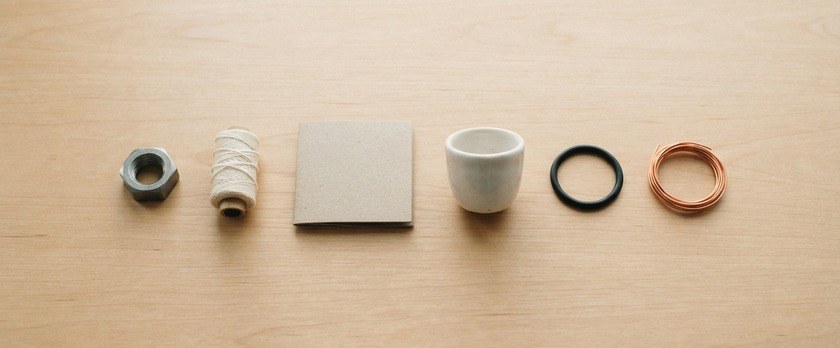
The work categories in the Manufacturing Industry (Industrial Products) field are 17 categories for Specified Skilled Worker (i) and 3 categories for Specified Skilled Worker (ii) (Immigration Services Agency, “Manufacturing Industry (Industrial Products) Field,” as of June 25, 2026).
| Category | Work Categories |
|---|---|
| Specified Skilled Worker (i) (17 categories) | Machine and Metal Processing / Assembly of Electrical and Electronic Equipment / Metal Surface Treatment / Paper and Cardboard Box Manufacturing / Concrete Product Manufacturing / RPF Manufacturing / Ceramic Product Manufacturing / Printing and Bookbinding / Textile Product Manufacturing / Sewing / Electric Wire and Cable Manufacturing / Prefabricated Housing Product Manufacturing / Furniture Manufacturing / Shaped and Unshaped Refractory Manufacturing / Ready-Mixed Concrete Manufacturing / Rubber Product Manufacturing / Bag Manufacturing |
| Specified Skilled Worker (ii) (3 categories) | Machine and Metal Processing / Assembly of Electrical and Electronic Equipment / Metal Surface Treatment |
The work for Specified Skilled Worker (i) is defined as engaging in tasks in each manufacturing process “by understanding the instructions of a supervisor or by one’s own judgment,” while the work for Specified Skilled Worker (ii) is defined as engaging in tasks and managing processes “while supervising multiple skilled workers.” In all categories, it is permitted to incidentally engage in related tasks (procurement and transportation of raw materials and parts, tasks in preceding and subsequent processes, operation of cranes and forklifts, cleaning and maintenance, etc.) that are normally performed by Japanese nationals engaged in those duties.
Additionally, at the expert meeting on September 9, 2026, proposals were presented for adding job categories and primary skills, including the Manufacturing Industry (Industrial Products) field (a cabinet decision is expected in December). For details, please refer to Proposed Addition of Job Categories to Specified Skilled Worker and Employment for Skill Development.
In the Manufacturing Industry (Industrial Products) field, particular attention should be paid to the industrial classification of the business site where foreign nationals work.
The operational policy requires that the business site where Specified Skilled Workers engage in activities conducts industries specified in the Ministry of Economy, Trade and Industry Notification (METI Notification No. 127 of 2022) among the industries listed in the Japan Standard Industrial Classification. The notification enumerates the target industries for both (i) and (ii), with 76 items for (i) (e.g., Textile Industry, Furniture Manufacturing Industry, Printing and Related Industries, Plastic Product Manufacturing Industry, Rubber Product Manufacturing Industry, Bag Manufacturing Industry, Ready-Mixed Concrete Manufacturing Industry, Automobile and Parts Manufacturing Industry, Packaging Industry).
The practical points are as follows:

Operators accepting Specified Skilled Workers in the Manufacturing Industry (Industrial Products) field are required to belong to a Specified Skilled Worker Accepting Business Implementation Corporation. The Ministry of Economy, Trade and Industry states that all business sites must join the Japan Association for Industrial Manufacturing Skilled Human Resources (JAIM).
And what is important is the timing of joining. The operational guidelines stipulate the following:
In other words, the process is to apply after completing the JAIM membership and having your company’s name listed in the member directory. The membership procedures and required documents are explained on the JAIM website. Please allow ample time and start early in parallel with your recruitment activities.
In addition, Specified Skilled Worker Accepting Organizations are also required to do the following:
Failure to do so will result in non-compliance with the standards, making it impossible to accept Specified Skilled Workers.
If the business site is engaged in the following industries, it is necessary to implement additional measures agreed upon by the council (operational guidelines).
| Industry of Business Site | Additional Required Measures |
|---|---|
| Textile Industry | ① Operating in compliance with international human rights standards ② Electronic management of attendance ③ Implementation of a Partnership Building Declaration ④ Payment of Specified Skilled Worker salaries on a monthly basis |
| Printing and Related Industries | Belonging to any of the following: All Japan Federation of Printing Industry Cooperatives, National Gravure Cooperative Federation, All Japan Bookbinding Industry Cooperative Federation, All Japan Metal Printing Industry Cooperative Federation |
| Packaging Industry | Belonging to the Japan Packaging Industry Cooperative Federation |
In particular, the Textile Industry (e.g., sewing, textile product manufacturing) requires fulfilling all four measures, which takes time to prepare. The Ministry of Economy, Trade and Industry has separately published examination items for “Medium Classification 11 Textile Industry.” Applicable businesses should proceed with confirmation in parallel with preparations for joining JAIM.
The employment type for Specified Skilled Worker foreign nationals in the Manufacturing Industry (Industrial Products) field is limited to direct employment. The public notice on Landing standards also requires that a Specified Skilled Worker employment contract that includes worker dispatching as its content not be concluded.
In the Agriculture and Fisheries fields, which have a high acceptance rate in Miyazaki, worker dispatching is permitted under certain conditions. However, in the Manufacturing Industry (Industrial Products) field, acceptance through dispatching companies is not allowed. This requires particular attention, as many manufacturing companies commonly utilize dispatched employees.
Passing the following two examinations is required:
If a Technical Intern Training (ii) program has been completed satisfactorily, and a relevance is recognized between the skills acquired through that Technical Intern Training and the skills required for the work to be engaged in under Specified Skilled Worker (i), proof of skills and Japanese language proficiency is not required. The operational guidelines state that this treatment will continue for the time being even after April 1, 2027 (Reiwa 9).
Even if a job category or task for which no relevance is recognized has been completed, Japanese language proficiency will be deemed proven by satisfactory completion of Technical Intern Training (ii) for the time being (a skills examination is still required).
The requirements for (ii) are as follows (operational guidelines):
There is no limit to the number of Period of Stay extensions for (ii), and if the requirements are met, accompanying family members (Spouse and Child) are also permitted (for an overview of the system, please see Differences between Specified Skilled Worker (i) and (ii)). Accepting companies are obligated to issue a document proving practical experience when requested by the individual, so it is important to record “which process, in what position, and for what period” the individual was engaged.
The estimated number of accepted foreign nationals and the current number of residents in the Manufacturing Industry (Industrial Products) field are as follows:
| Item | Value |
|---|---|
| Estimated number of accepted foreign nationals for the entire field (5 years from Reiwa 6 to 10) | 319,200 people |
| Of which, estimated number of accepted Specified Skilled Worker (i) foreign nationals (5-year cap) | 199,500 people |
| Estimated number of accepted Employment for Skill Development (ESD) foreign nationals (2-year cap from Reiwa 9) | 119,700 people |
| Number of Specified Skilled Worker (i) residents (as of end of June 2026, preliminary figure) | 62,033 people |
| Fulfillment rate of estimated acceptance number | 31.1% |
| Annual increase (difference from end of June 2025) | 10,970 people |
The overall fulfillment rate for Specified Skilled Worker is 52.9%, and for the Food Service Industry, it has reached 98.1%. If the quota is filled, the issuance of Certificate of Eligibility will be temporarily suspended. The fulfillment rate of 31.1% in the Manufacturing Industry (Industrial Products) field is low among all fields, and it is considered that there is little concern about this for the time being. The remaining quotas for each field are summarized in Estimated Acceptance Quota for Specified Skilled Worker.
According to the Sectoral Operational Policy, the effective job offer ratio for occupations in the manufacturing sector (Reiwa 6) is 2.81 times, and it is estimated that even with continued efforts to improve productivity and secure domestic human resources, a labor shortage of approximately 319,200 people will occur by Reiwa 10.
The Employment for Skill Development Program (ESD), which replaces Technical Intern Training, will begin on April 1, 2027 (Reiwa 9). For Employment for Skill Development in the Manufacturing Industry (Industrial Products) field, the Sectoral Operational Policy stipulates the following:
Manufacturing businesses accepting Technical Intern Training participants are advised to plan now for both the transition to Specified Skilled Worker and the switch to the Employment for Skill Development Program (ESD).
Q1. Can I accept Specified Skilled Workers from a worker dispatching company?
A. No, you cannot. The employment type for Specified Skilled Workers in the Manufacturing Industry (Industrial Products) sector is limited to direct employment. Worker dispatching is only permitted in fields such as Agriculture and Fisheries.
Q2. By when should I join JAIM?
A. Before submitting any Status of Residence applications. When applying, you will be required to submit a printed copy of the member directory published on the JAIM website (showing your company’s name).
Q3. Our company is in the manufacturing industry, but can any factory accept them?
A. This is determined for each business establishment where foreign nationals work. The industry conducted by that business establishment must fall under the industries specified by the Ministry of Economy, Trade and Industry notification within the Japan Standard Industrial Classification.
Q4. Are there any differences when accepting workers at a sewing factory compared to other manufacturing industries?
A. Business establishments in the textile industry are required to implement four measures: compliance with international human rights standards, digitalization of attendance management, implementation of a partnership building declaration, and a monthly salary system.
Q5. Can those who have completed Technical Intern Training (ii) become Specified Skilled Worker (i) without an examination?
A. If a correlation is recognized between the job type/work of the completed Technical Intern Training and the work to be engaged in as Specified Skilled Worker (i), proof of skills and Japanese language proficiency is not required. If no correlation is recognized, a skills examination is required, but Japanese language proficiency is deemed to be proven for the time being.
Q6. How many years of experience are required for Specified Skilled Worker (ii)?
A. The operational guidelines require at least three years of practical experience in a manufacturing site of a company with a base in Japan. Additionally, the skills examination for (ii) and Japanese language requirements must be met.
There are 140 Specified Skilled Workers in the Manufacturing Industry (Industrial Products) sector in Miyazaki Prefecture, ranking 7th by sector. While it is the 3rd largest sector nationwide, its share in the prefecture is 4.6%, about one-third of the national average of 14.8%, indicating that the utilization of Specified Skilled Worker in the manufacturing industry within the prefecture is still in its early stages. By municipality, they are concentrated in Miyazaki City, Ebino City, Nichinan City, Miyakonojo City, and Nobeoka City, with approximately one-third of all Specified Skilled Workers in Ebino City working in this sector.
In terms of the system, the three major differences from other sectors are: ① joining JAIM before applying, ② the industrial classification of the business establishment falling under the notification, and ③ being limited to direct employment. The acceptance quota fulfillment rate is 31.1%, indicating ample room, so there is a high possibility of acceptance if the initial requirements are correctly met.
The Employment for Skill Development Program (ESD) will begin in April 2027. Manufacturing businesses accepting Technical Intern Training participants are advised to plan now for both the transition to Specified Skilled Worker and the switch to the Employment for Skill Development Program (ESD).
💴 Estimated Fee: Support fees for Specified Skilled Worker applications are listed on our “Fee” page. The first consultation is free for up to 60 minutes online (via web conferencing system).
As an Administrative Scrivener Corporation in Miyazaki City, Miyazaki Prefecture, our office assists manufacturing businesses in the prefecture with accepting foreign nationals.
Please feel free to use our free consultation service.
📞 To book a phone consultation: 0985-68-0851
Before you submit, let us take a look.
Free Immigration Pre-Submission Check ›
For those who will apply for a status of residence at the Immigration Services Bureau by themselves. Before you submit, we check your application form and supporting documents and tell you about any missing documents and points to watch. We accept checks online (Google Meet, about 20 minutes) or via LINE.
・Eligible: applications for a Certificate of Eligibility, change of status of residence and extension of period of stay (applications for permanent residence are accepted only from residents of Miyazaki Prefecture). Naturalization is not covered.
・Online (Google Meet): once per application. Replies via LINE: available for the same application until you submit it.
・Our guideline for replies via LINE is, in principle, within 2 business days (we are closed on Saturdays, Sundays and public holidays; replies may take longer when we are busy).
・Please send copies of your documents by LINE or email. For your residence card, send the front side only; please do not send the side showing your My Number.
・What we tell you is our office’s opinion. It does not guarantee approval; the outcome depends on the decision of the Immigration Services Bureau.
・We only point out missing documents and points to watch. We do not prepare or rewrite your application documents for you or draft text for them, and we do not tell you whether your application is likely to be approved (if you would like to engage us, we will introduce the Self-Prep Course, the Light Plan and the Standard Plan).
・If we find that a document contains information that is not true, or that the application is not your own (or a family member’s), we will decline the check.
This article is written based on publicly available information as of September 2026. The number of foreign residents is a preliminary figure published by the Immigration Services Agency (as of the end of December 2025, and the fulfillment rate as of the end of June 2026). The requirements, job categories, target industrial classifications, and measures agreed upon by the council in the Manufacturing Industry (Industrial Products) sector may change in the future due to revisions to notifications/operational guidelines or operations by the Ministry of Economy, Trade and Industry. In particular, matters related to the Employment for Skill Development Program (ESD) starting in April 2027 may change as they will be concretized by future government ordinances and notifications. For actual acceptance and applications, please confirm with official information from the Immigration Services Agency and the Ministry of Economy, Trade and Industry or with our office.
Author of this article: Administrative Scrivener Authorized to File Applications, Satoshi Nakayama
Representative, Administrative Scrivener Corporation Miyazaki International Legal Office
Location: Miyazaki City, Miyazaki Prefecture