
Blog
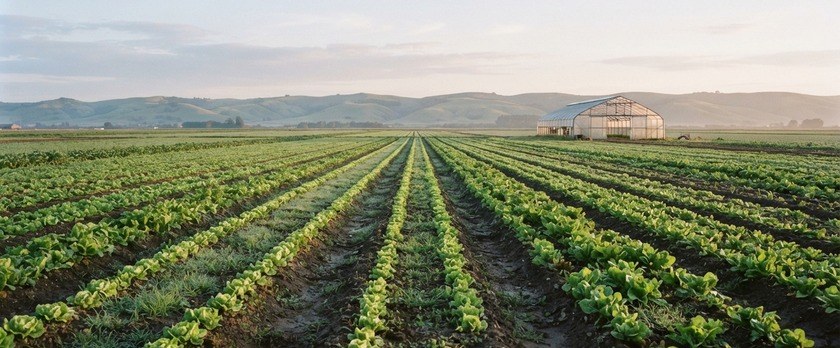
Among the 3,012 foreign nationals with Specified Skilled Worker (i) Status of Residence working in Miyazaki Prefecture, the most common field is Agriculture (931 people, approx. 31%). As the national average for Agriculture is about 10%, Miyazaki can be said to be a prefecture where “Specified Skilled Worker = Agriculture” is three times more prominent than the national average. Furthermore, among the 30 Specified Skilled Worker (ii) holders for skilled workers in the prefecture, 27 are in Agriculture, highlighting the prominence of Agriculture in this category as well. This article will first confirm the actual situation in Miyazaki with figures from the latest statistics (as of the end of December 2025) from the Immigration Services Agency, and then organize the specific requirements for accepting Specified Skilled Workers in the Agriculture sector (duties that can be performed, examinations for the individual, employment experience of the accepting entity, membership in the Agricultural Specified Skills Council, and Worker Dispatch arrangements) in accordance with the operational guidelines of the Ministry of Agriculture, Forestry and Fisheries and the Immigration Services Agency. This content is intended for both agricultural corporations and farmers in Miyazaki Prefecture, as well as foreign nationals considering working in the Agriculture sector.
Key points are summarized below.
💡 In short: The Agriculture sector has an additional layer of “accepting entity requirements” compared to other Specified Skilled Worker fields. If you try to join the council after finding personnel, the application will be delayed by the time it takes for the membership notification to arrive. It is recommended to confirm the two points—six months of employment experience and council membership—in advance when you begin considering acceptance.
The Immigration Services Agency publishes the number of foreign nationals with Specified Skilled Worker Status of Residence every six months. The latest data providing a breakdown by prefecture and sector is as of the end of December 2025, and the main sectors in Miyazaki Prefecture are as follows.
| Sector (Specified Skilled Worker (i)) | Miyazaki Prefecture | Prefectural Proportion | National | National Proportion |
|---|---|---|---|---|
| Agriculture | 931 people | 30.9% | 37,952 people | 9.9% |
| Food and Beverage Manufacturing | 707 people | 23.5% | 93,393 people | 24.4% |
| Nursing Care | 635 people | 21.1% | 67,871 people | 17.8% |
| Food Service Industry | 203 people | 6.7% | 43,869 people | 11.5% |
| Construction | 199 people | 6.6% | 49,323 people | 12.9% |
| Fisheries | 146 people | 4.8% | 4,590 people | 1.2% |
| Industrial Product Manufacturing | 140 people | 4.6% | 56,736 people | 14.8% |
| Other (Automobile Maintenance, Building Cleaning, Accommodation, etc.) | 51 people | 1.7% | — | — |
| Total | 3,012 people | 100% | 382,341 people | 100% |
Nationally, Food and Beverage Manufacturing (24.4%) holds the top position, with Agriculture ranking sixth (9.9%). In Miyazaki, both the ranking and proportion differ significantly, with Agriculture taking the top spot at approximately 31%. Fisheries also has four times the national proportion. Compared to other prefectures in Kyushu, the number of Specified Skilled Worker (i) in Agriculture is: Kumamoto Prefecture 2,854 people, Kagoshima Prefecture 1,959 people, Fukuoka Prefecture 1,318 people, Miyazaki Prefecture 931 people, and Oita Prefecture 673 people, placing Miyazaki as the third largest after Kumamoto and Kagoshima.
Looking at the Specified Skilled Worker (i) in the Agriculture sector by municipality, the breakdown is as follows.
| Municipality | Specified Skilled Worker (i) in Agriculture | Reference: Total in all fields |
|---|---|---|
| Miyazaki City | 228 people | 738 people |
| Miyakonojo City | 206 people | 716 people |
| Kawaminami Town | 125 people | 189 people |
| Kobayashi City | 81 people | 188 people |
| Kushima City | 49 people | 98 people |
| Saito City | 44 people | 113 people |
| Kunitomi Town | 38 people | 68 people |
| Nichinan City | 31 people | 213 people |
| Takanabe Town | 22 people | 41 people |
| Ebino City / Takaharu Town | 21 people each | 77 people / 29 people |
Of the 931 Specified Skilled Workers in the agriculture sector in Miyazaki Prefecture, the nationalities are as follows: Indonesia (392 people), Vietnam (266 people), Cambodia (67 people), Philippines (55 people), Myanmar (45 people), Nepal (42 people), and China (37 people) (Table 6). Nationally, Indonesia (14,089 people) and Vietnam (9,789 people) are also the top two countries in the agriculture sector, and Miyazaki shows the same trend. It is practical for accepting organizations to prepare Japanese language support and living support with these two language groups in mind.
The number of Highly Skilled Professional (ii) for skilled workers increased to 7,955 nationwide (as of the end of December 2025, approximately 2.6 times the previous period). In Miyazaki Prefecture, there are 30 people, broken down as follows: Agriculture (27 people), Construction (1 person), Food and Beverage Manufacturing (1 person), and Food Service Industry (1 person). Although the agriculture sector was only added to the Specified Skilled Worker (ii) category in June 2023, the numbers show that individuals are already progressing from Specified Skilled Worker (i) to Specified Skilled Worker (ii) in Miyazaki. Specified Skilled Worker (ii) has no limit on the number of Period of Stay renewals, and if the requirements are met, family members can also accompany them, making it a valuable option for agricultural corporations seeking “long-term employees.”
The work categories for Specified Skilled Workers in the agriculture sector are the following two (Operational Policy by Sector for Agriculture, Separate Volume of Operational Guidelines 1).
| Work Category | Duties performed by Specified Skilled Worker (i) | Duties performed by Specified Skilled Worker (ii) |
|---|---|---|
| General Crop Farming | Cultivation management, harvesting/shipping/sorting of agricultural products, etc. | In addition to the above, management duties related to said work |
| General Livestock Farming | Breeding management, harvesting/shipping/sorting of livestock products, etc. | In addition to the above, management duties related to said work |
The Separate Volume of Operational Guidelines states that the duties performed must include “cultivation management” or “breeding management.” For example, arrangements where the worker only performs sorting at a fruit and vegetable sorting facility or only bags compost are not permitted.
It is permitted to incidentally engage in related duties that Japanese workers engaged in crop farming or livestock farming usually perform. The Separate Volume of Operational Guidelines provides the following examples of such tasks:
However, it is explicitly stated that “engaging exclusively in related duties is not permitted.” Eligibility for Status of Residence is determined by the overall activities during the Period of Stay, so if the time spent in processing plants or direct sales stores becomes too long outside of busy seasons, it could cause problems during renewal.
In addition to being directly employed by farmers, individuals can also be employed by organizations that undertake work from farmers, or by organizations composed of farmers (such as JAs, dairy helper cooperatives, and contractor organizations) to perform duties. This also includes duties performed under contract.

According to the current Separate Volume of Operational Guidelines (partially revised on June 6, Reiwa 7), to work in the agriculture sector as a Specified Skilled Worker (i), both of the following qualifications are required:
Those who have successfully completed Technical Intern Training (ii) are exempt from the examination. If you have successfully completed Technical Intern Training (ii) in “Facility Horticulture,” “Field Crops/Vegetables,” or “Fruit Trees” for crop farming, or “Pig Farming,” “Poultry Farming,” or “Dairy Farming” for livestock farming, you will be exempt from the corresponding skill examination. Furthermore, those who have successfully completed Technical Intern Training (ii) are exempt from the Japanese language examination, regardless of their job type. To receive the exemption, you need either a certificate of passing the practical examination of the Agricultural Skills Evaluation Test (Professional Level) at the time of completing Technical Intern Training (ii), or, if you have not passed it, an evaluation record (Reference Form No. 1-2) prepared by the implementing organization.
For (ii), in addition to passing the (ii) Agricultural Skills Measurement Test (General Crop Farming / General Livestock Farming), one of the following types of practical experience is required:
“Supervising multiple employees” refers to performing work based on one’s own judgment according to natural conditions and the state of livestock, while guiding and supervising two or more workers and managing processes. The nationality or job responsibilities of the workers being supervised are not questioned, and it is understood that not providing supervision during certain periods due to busy/slack seasons is acceptable. The presence or absence of practical experience will be confirmed when taking the (ii) examination.
Therefore, the accepting organization has an obligation to issue a document certifying practical experience when requested by a foreign national (Public Notice No. 7). Failure to issue it will result in non-compliance with the standards, making it impossible to accept Specified Skilled Workers. Agricultural corporations that wish to develop human resources from (i) to (ii) should record daily assigned tasks and the number of people supervised, which will make it easier to issue certificates later.
In addition to the common requirements for Specified Skilled Worker accepting organizations (such as compliance with labor laws, remuneration equal to or greater than that of Japanese nationals, and implementation of support plans), the agricultural sector has unique standards stipulated by the Ministry of Agriculture, Forestry and Fisheries Public Notice (Ministry of Agriculture, Forestry and Fisheries Public Notice No. 524 of Heisei 31).
When an agricultural producer directly employs a Specified Skilled Worker, they must have experience of continuously employing the same worker (including Technical Intern Trainees) for at least six months within the past five years. In the case of a Corporation, this also includes experience where an executive officer performing duties employed workers as a sole proprietor.
Even without this experience, “equivalent experience” is sufficient. Equivalent experience refers to experience engaging in labor management duties continuously for six months or more within the past five years. This includes cases where a child was responsible for labor management under their parent’s agricultural business, or when an employee of an agricultural Corporation with labor management experience becomes independent.
Farmers who have previously operated their farms solely with family members may not meet this requirement when employing foreign nationals for the first time. In such cases, practical options include first employing Japanese part-time or temporary workers for six months or more to gain experience, or utilizing the dispatching arrangement explained next.
Accepting organizations must join the “Agricultural Specified Skills Council” established by the Ministry of Agriculture, Forestry and Fisheries before submitting any Applications for Status of Residence. After joining, there is an obligation to cooperate as necessary with the Council’s information provision and surveys; failure to do so will result in non-compliance with the standards. The key points of the procedure outlined on the Ministry of Agriculture, Forestry and Fisheries website are as follows:
⚠️ Schedule Note: Since it takes approximately two weeks for the Council’s membership notification to arrive, acting only after a hiring decision is made will delay the commencement of the Application for Certificate of Eligibility or Application for Change of Status of Residence. It is safer to complete the membership application in advance once interviews with successful exam candidates or the completion period for Technical Intern Trainees are in sight.
In the case of direct employment, in addition to the usual documents, the Application for Status of Residence requires the submission of the “Pledge for Specified Skilled Worker Accepting Organizations that Directly Employ Specified Skilled Workers in the Agricultural Sector” (Sector Reference Form No. 11-1) and documents confirming membership in the Agricultural Specified Skills Council. If the entire support plan is outsourced to a Registered Support Organization, a Registered Support Organization Pledge (Sector Reference Form No. 11-4) is also required. If the pledged matters can no longer be upheld, there is an obligation to report to the Regional Immigration Services Bureau and the Ministry of Agriculture, Forestry and Fisheries.
While Specified Skilled Worker is generally based on direct employment, in the agricultural sector, a form of dispatching workers to agricultural producers, with a worker dispatching business operator acting as the Specified Skilled Worker accepting organization, is also permitted. The sector-specific operational policy cites seasonal fluctuations such as the inability to perform farm work in winter, and varying harvest and planting peaks depending on the crop even within the same region, stating that the dispatching arrangement is essential for securing labor during busy farming seasons and for flexibility between production areas.
Not just anyone can become a dispatching organization. It is limited to businesses that hold a Worker Dispatch license, fall under any of the following ① to ④, and are deemed appropriate by the Minister of Justice after consultation with the Minister of Agriculture, Forestry and Fisheries.
The period for which a dispatching organization is deemed appropriate is 3 years, after which its eligibility will be re-confirmed. Furthermore, the region of the dispatched entity must be within a range where the dispatching organization’s manager can appropriately manage employment, such as handling complaints, on a day-trip basis.
Farmers who become dispatched entities must either have experience continuously employing the same worker for 6 months or more within the past 5 years, or have appointed a person who has completed a dispatched entity manager training course (such as courses for dispatched entities conducted by Prefectural Labor Bureaus) as the dispatched entity manager. A significant difference from direct employment is that even farmers without employment experience can accept workers in a Worker Dispatch arrangement if they appoint a person who has completed the training as the dispatched entity manager. Dispatched entities also bear the obligation to cooperate with the council and submit the “Pledge of Dispatched Entity Business Operator” (Sectoral Reference Form No. 11-2).
Agriculture is an industry exempt from the provisions of the Labor Standards Act regarding working hours, breaks, and holidays, and this also applies when employing Specified Skilled Workers. However, the operational guidelines appendix states that, taking into account the foreign national’s intentions, working hours must be managed to prevent excessive long hours, referencing the Labor Standards Act, and breaks and holidays must be appropriately set. Furthermore, it is explicitly stated that only the provisions for working hours, breaks, and holidays are exempt, and late-night overtime pay for night shifts and other provisions are not exempt. Businesses with early morning milking or late-night shipping operations should not forget to calculate late-night overtime.

In the Sectoral Operational Policy for the agriculture sector, decided by the Cabinet on January 23, 2026, the projected acceptance number of Specified Skilled Worker (i) foreign nationals for the five-year period from FY2024 to FY2028 is 73,300, which will be operated as the acceptance cap. As of the end of June 2026, the number of foreign nationals residing in the agriculture sector nationwide is 44,050 (fulfillment rate 60.1%). As organized in our office’s article “Projected Acceptance Numbers for Specified Skilled Workers | Food Service Industry 98% & Remaining Quotas for 19 Sectors“, compared to sectors like the food service industry where quotas are nearly filled, agriculture still has room.
The same Sectoral Operational Policy also covers the agriculture sector for the Employment for Skill Development (ESD) Program, which begins in April 2027 (Reiwa 9), setting the projected acceptance number for the two-year period from FY2027 at 26,300. The job categories for ESD are the same as Specified Skilled Worker, and in addition to direct employment, Worker Dispatch arrangements are also permitted. The Employment Transfer restriction period is 1 year. The path to transition from ESD to Specified Skilled Worker (i) (e.g., passing the advanced level of the ESD evaluation exam) is also stipulated in the same policy. The acceptance quota for Miyazaki Prefecture is explained in “ESD Acceptance Quota | Miyazaki is a “designated area” with up to 3 times the quota“.
In the Sectoral Operational Policy decided by the Cabinet on January 23, 2026, the Japanese language proficiency level required for Specified Skilled Worker (i) foreign nationals in the agriculture sector is stated as A2.2 equivalent or higher according to the “Common European Framework of Reference for Languages,” and for Specified Skilled Worker (ii), it is B1 equivalent or higher. The names of the skills tests are also “Agriculture Specified Skilled Worker (i) Evaluation Test” and “Agriculture Specified Skilled Worker (ii) Evaluation Test.” On the other hand, the Immigration Services Agency has announced that “acceptance will be possible for newly established specified industrial fields and job categories as soon as ministerial ordinances and other preparations are complete.” The currently enforced operational guidelines appendix for the agriculture sector (revised June 6, Reiwa 7) still assumes JFT-Basic N4 or higher and the Specified Skilled Worker (i) and (ii) Agriculture Skills Measurement Tests. When the new standards and names will be implemented will be determined by a revision of the operational guidelines appendix. Please check the latest version at the time of application.
| Check Item | Key Point |
|---|---|
| Employment experience of 6 months or more | Have you continuously employed the same worker (including Technical Intern Training participants) for 6 months or more within the past 5 years? If not, consider “equivalent experience” or a worker dispatch arrangement. |
| Agricultural Specified Skills Council | Join before applying for Status of Residence. Free of charge, notification in approximately 2 weeks. Keep the membership notification. |
| Job Category | Cultivation or livestock farming. Clearly state job duties, including cultivation management and livestock management, in the employment contract. |
| Applicant Requirements | Certificate of passing the examination, or certificate of passing the specialized practical examination for Technical Intern Training (ii) (or evaluation report). |
| Support System | Provide support in-house or outsource to a Registered Support Organization. The outsourced organization must be one that cooperates with the council. |
| Working Conditions | Remuneration equal to or higher than that of Japanese nationals, late-night premium, setting of breaks and holidays. |
| Proof of Practical Experience | For individuals aiming for Specified Skilled Worker (ii), keep records of assigned tasks and number of people supervised. |
Q1. Can individual farmers employ Specified Skilled Worker foreign nationals?
A. Yes, they can. However, they must have continuous employment experience of a worker for 6 months or more within the past 5 years (or equivalent experience) and be a member of the Agricultural Specified Skills Council. If it is a family-run farm with no employment experience, consider a worker dispatch arrangement or first employing a Japanese national to gain experience.
Q2. Can a foreign national hired for vegetable cultivation also work in sales at a direct sales outlet?
A. If it is a sales task involving agricultural products produced by your company, they can incidentally engage in it as a related task that Japanese nationals also typically perform. However, engaging exclusively in sales is not permitted.
Q3. Can someone who completed Technical Intern Training (facility horticulture) be employed as a Specified Skilled Worker in livestock farming?
A. Exemption from the skills examination is limited to the corresponding category. Technical Intern Training (ii) completers in facility horticulture are exempt from the general cultivation agriculture examination, but to work in general livestock farming, they must pass the Specified Skilled Worker (i) Agricultural Skills Measurement Examination (general livestock farming). The Japanese language examination is exempt regardless of the job type.
Q4. Is there a fee to join the council?
A. There are no fees such as admission fees or annual membership fees. The membership notification will be sent by email, usually within about 2 weeks of the web application.
Q5. Which areas in Miyazaki Prefecture have a high number of Specified Skilled Worker foreign nationals in the agriculture sector?
A. As of the end of December 2025, the order is Miyazaki City (228 people), Miyakonojo City (206 people), Kawaminami Town (125 people), and Kobayashi City (81 people). In Kawaminami Town, 125 out of 189 Specified Skilled Worker (i) residents are in agriculture.
Q6. What changes when one obtains Specified Skilled Worker (ii)?
A. There will be no upper limit on the number of times the Period of Stay can be extended, and if the requirements are met, family members can accompany them. The obligation to create and implement a support plan for the accepting side is unique to Specified Skilled Worker (i) and is not imposed on Specified Skilled Worker (ii). In the agriculture sector in Miyazaki Prefecture, 27 people were residing as Specified Skilled Worker (ii) as of the end of December 2025.
In Miyazaki Prefecture, agriculture accounts for the largest number of Specified Skilled Worker (i) at 931 people, with one in three Specified Skilled Worker residents in the prefecture working in agriculture. There are also 27 Specified Skilled Worker (ii) residents, indicating that skilled personnel are beginning to develop. To accept Specified Skilled Worker in the agriculture sector, in addition to job duties aligned with cultivation/livestock farming categories and the applicant’s examination (or exemption due to Technical Intern Training (ii) completion), there are unique agricultural requirements for the accepting side: employment experience of 6 months or more and prior membership in the Agricultural Specified Skills Council. It is also important to note that there is an option for a worker dispatch arrangement, and while working hours may be exempt, late-night premiums remain. With the start of the Employment for Skill Development (ESD) Program in 2027 and a review of Japanese language requirements on the horizon, preparing your company’s requirements in advance before the system changes is the shortest path to uninterrupted hiring.
Our office, based in Miyazaki City, assists agricultural corporations and farmers in Miyazaki Prefecture with Specified Skilled Worker acceptance (from council membership to Status of Residence application and support plans), as well as foreign nationals working in agriculture with their Status of Residence procedures.
Our office provides consultations to both foreign nationals and accepting companies, based on the latest system trends.
Please feel free to use our free consultation service first.
📩 Contact Us Here
📞 To book a phone consultation: 0985-68-0851
Before you submit, let us take a look.
Free Immigration Pre-Submission Check ›
For those who will apply for a status of residence at the Immigration Services Bureau by themselves. Before you submit, we check your application form and supporting documents and tell you about any missing documents and points to watch. We accept checks online (Google Meet, about 20 minutes) or via LINE.
・Eligible: applications for a Certificate of Eligibility, change of status of residence and extension of period of stay (applications for permanent residence are accepted only from residents of Miyazaki Prefecture). Naturalization is not covered.
・Online (Google Meet): once per application. Replies via LINE: available for the same application until you submit it.
・Our guideline for replies via LINE is, in principle, within 2 business days (we are closed on Saturdays, Sundays and public holidays; replies may take longer when we are busy).
・Please send copies of your documents by LINE or email. For your residence card, send the front side only; please do not send the side showing your My Number.
・What we tell you is our office’s opinion. It does not guarantee approval; the outcome depends on the decision of the Immigration Services Bureau.
・We only point out missing documents and points to watch. We do not prepare or rewrite your application documents for you or draft text for them, and we do not tell you whether your application is likely to be approved (if you would like to engage us, we will introduce the Self-Prep Course, the Light Plan and the Standard Plan).
・If we find that a document contains information that is not true, or that the application is not your own (or a family member’s), we will decline the check.
This article was written based on publicly available information as of September 2026. The number of residents is a preliminary figure (as of the end of December 2025) published by the Immigration Services Agency. Requirements for the agriculture sector, examination names, and Japanese language proficiency levels may change in the future due to revisions to operational guidelines and public notices. For actual acceptance and application, please confirm with official information from the Immigration Services Agency, the Ministry of Agriculture, Forestry and Fisheries, or our office.
Author of this article: Administrative Scrivener Authorized to File Applications, Satoshi Nakayama
Representative, Administrative Scrivener Corporation Miyazaki International Legal Office
Location: Miyazaki City, Miyazaki Prefecture