Blog

Three new fields—Linen Supply, Logistics Warehousing, and Resource Recycling—will be added to the target fields for the Status of Residence “Specified Skilled Worker.” This expansion increased the Specified Skilled Worker program from 16 fields to 19 fields (Cabinet decision of January 23, 2026), all of which are industries facing severe labor shortages. The development of additional criteria notifications and other regulations is underway, and the actual acceptance of workers is expected to begin around 2027 (Reiwa 9), starting with the fields where preparations are complete. In this article, an Administrative Scrivener will clearly explain the business activities, estimated number of accepted workers (draft), Japanese language and skill requirements for each of the three additional fields, their relationship with the Employment for Skill Development (ESD; Japanese: Ikusei Shuro) Program, and key points that accepting companies and foreign nationals should prepare for now.
The Specified Skilled Worker System (launched in 2019) is a Status of Residence that accepts foreign nationals with a certain level of expertise and skills in industrial fields facing severe labor shortages. It has gradually expanded from the initial 12 fields at its inception, and in 2024, with the addition of fields such as automobile transport, railway, forestry, and timber industry, it reached 16 fields.
On January 23, 2026, at a meeting of the relevant ministers and by Cabinet decision, the government adopted the field-specific operational policies for Specified Skilled Worker and ESD, adding three new fields: Linen Supply, Logistics Warehousing, and Resource Recycling. Specified Skilled Worker now covers 19 fields. Note that actual acceptance in the newly designated fields and job categories becomes possible only after the necessary ministerial ordinances are prepared, promulgated and brought into force.
All three fields have high job-opening-to-applicant ratios, and are considered industries where labor shortages cannot be fully addressed by mechanization and labor-saving measures alone. Details of the system are being progressively developed as additional criteria notifications and operational guidelines for each field, and acceptance is expected to begin in fields where preparations are complete.
📌 Key Point: The decision to add the three fields is separate from the actual start of acceptance. Acceptance will commence sequentially after the examinations and operational guidelines for each field have been established. As of now (September 2026), preparation of the ministerial ordinances is under way, and the start date will vary by field.
First, let’s organize the positioning and main business activities of the three fields.
| Field | Main Business Activities (Image) | Background of Labor Shortage |
|---|---|---|
| Linen Supply | A series of processes from collection, washing, finishing, to delivery of linen items such as sheets and towels contracted with hotels, ryokans, hospitals, etc. | Rising accommodation demand due to the increase in inbound foreign tourists |
| Logistics Warehousing | Operations such as receiving/shipping, cargo handling, distribution processing, inspection, sorting/labeling, and inventory management in warehouses | Increase in logistics volume due to the expansion of the e-commerce market |
| Resource Recycling | Operations such as intermediate processing (crushing, sorting, etc.) at waste treatment facilities, collection/transport, and sorting | Transition to a circular economy and shortage of skilled workers |
All of these are industries that “support our lives and services behind the scenes.” Fields that support the growing sectors of tourism, e-commerce, and environment from a human resources perspective will be added as recipients for Specified Skilled Worker.
Linen supply is a service that involves collecting linen items such as sheets, towels, and uniforms contracted with hotels, ryokans, hospitals, nursing care facilities, etc., washing, finishing, and packaging them at a dedicated factory, and then delivering them. For Specified Skilled Worker, this includes a series of processes from receiving to shipping (finishing work, machine feeding, inspection, bundling and packaging, etc.) and tasks related to health and safety.
The background to this is the rising accommodation demand, symbolized by the government’s goal of 60 million inbound foreign tourists by 2030. In terms of the system, the Additional Criteria Notification (Linen Supply Field) was published on April 8, 2026, and the Separate Volume of Operational Guidelines (Linen Supply Field) was established on June 1, 2026, indicating that preparations are proceeding ahead of schedule.
The Logistics Warehousing field involves engaging in operations such as receiving/shipping, cargo handling, distribution processing, outbound inspection, sorting/labeling, and inventory management of goods in warehouses used by shippers, warehouse operators, freight forwarding agents, etc. Knowledge and skills to safely and accurately handle a wide variety of cargo are required.
Due to the recent expansion of the e-commerce market, both warehouse area and operation have increased, and labor shortages are becoming severe across the entire industry. In terms of the system, the Additional Criteria Notification (Logistics Warehousing Field) was published on June 26, 2026, and the framework for acceptance is being developed.
The Resource Recycling field primarily involves intermediate processing at waste treatment facilities (such as crushing and sorting, for waste reduction and safety), as well as collection, transport, and sorting operations. This field plays a role in the transition to a circular economy, driven by the increasing demand for recycled plastics.
In this field, operations at facilities licensed under the Waste Management Act are a prerequisite, and safety measures, such as assigning health and safety personnel, are expected to be emphasized. To properly handle a wide variety of waste, careful acquisition of knowledge and skills on-site is required.

Under the Specified Skilled Worker System, an estimated acceptance cap is set for each sector for a certain period, which functions as the maximum number of accepted individuals. The estimated acceptance numbers set for the three sectors in the field-specific operational policies adopted by Cabinet decision are as follows (whole field = Specified Skilled Worker (i) + ESD):
| Sector | Estimated Acceptance Numbers (whole field: Specified Skilled Worker (i) + ESD) |
|---|---|
| Linen Supply | Approximately 7,700 individuals across the sector |
| Logistics Warehousing | Approximately 18,300 individuals across the sector |
| Resource Recycling | Approximately 4,500 individuals across the sector |
⚠️ These are the estimated numbers for each field as a whole and operate as acceptance caps. The table combines Specified Skilled Worker (i) and Employment for Skill Development (ESD); the breakdown is Linen Supply 4,300 + 3,400, Logistics Warehousing 11,400 + 6,900, and Resource Recycling 900 + 3,600 (periods vary by sector). Please always verify actual figures with primary sources.
To work as a Specified Skilled Worker (i) in the three sectors, passing the following examinations is expected to be a general requirement:
Furthermore, a system is envisioned where individuals who have completed the Employment for Skill Development (ESD) Program and met the prescribed skill and Japanese language levels may be exempt from some parts of the examination and transition to Specified Skilled Worker (i). Specific tests and criteria for each sector will be sequentially indicated in the operational guidelines.
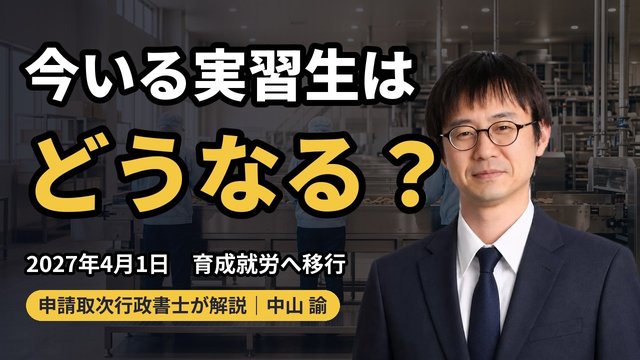
Understanding this in conjunction with the Employment for Skill Development (ESD) Program, scheduled to begin in April 2027, will help grasp the overall picture.
💡 The addition of these three sectors is positioned as a pathway for human resources, creating a career progression from ‘ESD (training) → Specified Skilled Worker (long-term employment).’
For more details on the Employment for Skill Development (ESD) Program itself, please also refer to the article: What is the Employment for Skill Development (ESD) Program? (Starting April 2027, Differences from Technical Intern Training).
👤 For foreign nationals considering working in Japan, the addition of these three sectors means an expansion of available job options.
🏢 For companies considering accepting foreign nationals for the first time, early information gathering and system development are key.
📅 Checklist for Businesses to Prepare for Implementation

The three fields are Linen Supply, Logistics Warehousing, and Resource Recycling. With the Cabinet decision of January 23, 2026, Specified Skilled Worker expanded from 16 fields to 19 fields.
Acceptance is expected to start sequentially as soon as the examinations and operational guidelines for each field are finalized. While some fields are further along in preparation, actual acceptance is generally anticipated around 2027 (Reiwa 9). Please note that it will not be a simultaneous start for all fields.
Passing the Specified Skilled Worker (i) skill examination for each field and a Japanese language examination (Japan Foundation Test for Basic Japanese, or Japanese Language Proficiency Test N4 or equivalent) is expected to be a requirement. Specific examinations for each field will be sequentially indicated in the operational guidelines.
The field-specific operational policies adopted by Cabinet decision set 7,700 for the whole Linen Supply field, 18,300 for Logistics Warehousing, and 4,500 for Resource Recycling. These combine Specified Skilled Worker (i) and ESD, broken down respectively as 4,300 + 3,400, 11,400 + 6,900, and 900 + 3,600. These figures operate as acceptance caps.
The Employment for Skill Development (ESD) Program is an entry-level Status of Residence primarily for “training” human resources over three years, while Specified Skilled Worker is a Status of Residence for human resources with certain skills to “work.” These three new fields are positioned as a smooth transition from the Employment for Skill Development (ESD) Program to Specified Skilled Worker (Aviation and automobile transportation industries are not covered by the Employment for Skill Development (ESD) Program).
We recommend starting early to confirm whether your company’s operations fall under the target job categories, ensure compliance with acceptance organization standards, understand field-specific additional requirements (such as joining councils), track examination and start schedules, and develop recruitment plans including combinations with the Employment for Skill Development (ESD) Program.
The addition of three fields—Linen Supply, Logistics Warehousing, and Resource Recycling—to Specified Skilled Worker expands the acceptance framework for foreign nationals in industries facing severe labor shortages. The addition of the fields and the estimated acceptance numbers were settled by the Cabinet decision of January 23, 2026; what remains is the promulgation and entry into force of the ministerial ordinances and the preparation of tests and operational guidelines for each field. The actual start of acceptance and the timing of examinations vary by field. This is precisely why, now that the expansion of the scope has been decided, it serves as a “signal to gather information and start preparing” for both foreign nationals and accepting businesses. Since the details of the system will become more concrete in the future, it is important to act early while checking primary sources of information.
Our office provides consultations for both foreign nationals and accepting businesses, based on the latest system trends.
Please feel free to use our free consultation service first.
Before you submit, let us take a look.
Free Immigration Pre-Submission Check ›
For those who will apply for a status of residence at the Immigration Services Bureau by themselves. Before you submit, we check your application form and supporting documents and tell you about any missing documents and points to watch. We accept checks online (Google Meet, about 20 minutes) or via LINE.
・Eligible: applications for a Certificate of Eligibility, change of status of residence and extension of period of stay (applications for permanent residence are accepted only from residents of Miyazaki Prefecture). Naturalization is not covered.
・Online (Google Meet): once per application. Replies via LINE: available for the same application until you submit it.
・Our guideline for replies via LINE is, in principle, within 2 business days (we are closed on Saturdays, Sundays and public holidays; replies may take longer when we are busy).
・Please send copies of your documents by LINE or email. For your residence card, send the front side only; please do not send the side showing your My Number.
・What we tell you is our office’s opinion. It does not guarantee approval; the outcome depends on the decision of the Immigration Services Bureau.
・We only point out missing documents and points to watch. We do not prepare or rewrite your application documents for you or draft text for them, and we do not tell you whether your application is likely to be approved (if you would like to engage us, we will introduce the Self-Prep Course, the Light Plan and the Standard Plan).
・If we find that a document contains information that is not true, or that the application is not your own (or a family member’s), we will decline the check.
This article is written based on publicly available information as of September 2026. Details of the system and implementation dates may change in the future. For actual applications, please confirm with official information from the Immigration Services Agency or our office.
Author of this article: Administrative Scrivener Satoshi Nakayama
Representative, Administrative Scrivener Corporation Miyazaki International Legal Office
Location: Miyazaki City, Miyazaki Prefecture