
Blog

The Immigration Services Agency announced on October 16, 2026, “Number of Overstayers in Japan (as of July 1, Reiwa 8).” The number of overstayers as of July 1, 2026, was 65,229, a decrease of 3,259 people (4.8%) from 68,488 on January 1, 2026.
The table in the published document showed the number as of January 1 from 1997 to 2025, but for 2026, it shows the numbers at two points in time: January 1 and July 1. In this article, after organizing the changes by nationality and Status of Residence that can be read from the published table, we will explain the mechanisms for foreign nationals themselves to avoid exceeding their Period of Stay and points to note for HR professionals at companies when checking Residence Cards (including the new format Residence Card that began to be issued on June 14, 2026).
The recent trends from Tables 1 and 3 of the published document are as follows:
| Date | Number of Overstayers |
|---|---|
| January 1, 2023 | 70,491 people |
| January 1, 2024 | 79,113 people |
| January 1, 2025 | 74,863 people |
| January 1, 2026 | 68,488 people |
| July 1, 2026 | 65,229 people |
Compared to 79,113 people on January 1, 2024, this is a decrease of approximately 13,900 people in two and a half years (calculated by our office).
Breaking down the movement over six months, out of 68,488 people on January 1, 2026, 9,279 people ceased to be overstayers (deportees, those who departed under a departure order, those who received special permission for residence, etc.), 59,209 people continued to overstay, and 6,020 new overstayers were added, totaling 65,229 people.
The overall picture of the “Zero Illegal Stay Plan” explanation, announced on August 31, 2026, is explained in our office’s article “Zero Illegal Stay Plan Explanation Announced | Enhanced Crackdown and Corporate Response.”
| Rank | Nationality/Region | July 1, 2026 | Change from January 1, 2026 |
|---|---|---|---|
| 1 | Thailand | 10,260 people | Decrease of 647 people |
| 2 | Vietnam | 10,135 people | Decrease of 1,466 people |
| 3 | South Korea | 9,759 people | Decrease of 261 people |
| 4 | China | 5,312 people | Decrease of 515 people |
| 5 | Philippines | 4,173 people | Decrease of 220 people |
| 6 | Indonesia | 4,077 people | Decrease of 171 people |
| 7 | Taiwan | 2,424 people | Decrease of 177 people |
| 8 | Sri Lanka | 2,378 people | Increase of 287 people |
| 9 | Turkey | 1,212 people | Decrease of 16 people |
| 10 | Cambodia | 938 people | Decrease of 106 people |
The top three countries/regions (Thailand, Vietnam, and South Korea) each account for approximately 15% of the total. Vietnam saw the largest decrease of 1,466 people in six months, and their ranking changed.
Looking at the Status of Residence at the time of becoming an overstayer, the majority of those from Thailand (9,269 people) and South Korea (9,301 people) were Temporary Visitor. On the other hand, for Vietnam, Technical Intern Training (5,193 people) was the most common, indicating that the background varies significantly by nationality (Table 2).
| Status of Residence (at the time of becoming an overstayer) | July 1, 2026 | Composition Ratio | Change from January 1, 2026 |
|---|---|---|---|
| Temporary Visitor | 39,180 people | 60.1% | Decrease of 2,427 people (5.8% decrease) |
| Technical Intern Training | 7,928 people | 12.2% | Decrease of 1,395 people (15.0% decrease) |
| Designated Activities | 7,661 people | 11.7% | Increase of 355 people (4.9% increase) |
| Student | 2,435 people | 3.7% | Increase of 262 people (12.1% increase) |
| Spouse or Child of Japanese National | 1,695 people | 2.6% | Decrease of 29 people (1.7% decrease) |
| Other | 6,330 people | 9.7% | Decrease of 25 people (0.4% decrease) |
The structure, where Temporary Visitor accounts for approximately 60%, remains unchanged. Technical Intern Training decreased from 11,210 people on January 1, 2024, to 7,928 people on July 1, 2026.
Please note that the “Status of Residence” in this table refers to the Status of Residence held at the time of becoming an illegal overstayer. It does not represent the number of people currently working under that Status of Residence.
The number of “new illegal overstayers” who were newly identified after January 1, 2026, and are still illegally overstaying as of July 1, is 6,020, accounting for 9.2% of all illegal overstayers.
| Status of Residence (at the time of becoming an illegal overstayer) | New Illegal Overstayers | Percentage of Illegal Overstayers with that Status of Residence |
|---|---|---|
| Temporary Visitor | 1,862 people | 4.8% |
| Designated Activities | 1,707 people | 22.3% |
| Technical Intern Training | 746 people | 9.4% |
| Student | 646 people | 26.5% |
| Period for Departure | 254 people | 17.7% |
| Other | 805 people | 12.2% |
By nationality/region, Vietnam (1,402 people) had the most new illegal overstayers, followed by Thailand (1,049 people), Indonesia (611 people), Sri Lanka (600 people), and China (343 people) (Table 4).
The “Other” category in this table (805 out of 6,587 people) includes Spouse or Child of Japanese National but does not include the period for departure, so its scope differs from the “Other” category in the table in §4.
The “Period for Departure” in the table refers to the period designated for departure for those whose Status of Residence has been revoked (Article 22-4, Paragraph 7 of the Immigration Control Act, not exceeding 30 days). Those who remain after this period are also counted as illegal overstayers (1,438 people as of July 1, 2026).

Remaining in Japan after your Period of Stay has expired without receiving an extension or change of Status of Residence is subject to deportation (Article 24, Item 4 (b) of the Immigration Control Act) and to imprisonment for not more than 3 years or a fine of not more than 3 million yen, or both (Article 70, Paragraph 1, Item 5 of the same Act). First, understand that this is not something that can be dismissed as a “mistake.”
If you have filed an Application for Extension of Period of Stay or an Application for Change of Status of Residence by the expiration date of your Period of Stay, even if the result is not issued by the expiration date, you can remain in Japan under your current Status of Residence until the result is issued or until the end of two months after the expiration date, whichever comes first (Article 20, Paragraph 6 and Article 21, Paragraph 4 of the Immigration Control Act; this is known as the special grace period). Those with a Period of Stay of 30 days or less are not eligible.
The important thing is to apply by the expiration date. If you apply after the expiration date, there is no special grace period. For information on when you can apply for an extension, please refer to our firm’s article “[2026] When to Apply for Extension of Period of Stay? 45 Days Before is a Guideline.”
When your Status of Residence is revoked, a period for departure not exceeding 30 days will be designated, except in cases where Permission for Landing was obtained by fraudulent means (Article 22-4, Paragraph 7 of the Immigration Control Act). If you remain after this period, you will become an illegal overstayer (Article 24, Item 2-4 of the same Act).
If you have already exceeded your Period of Stay and wish to return to your home country, there is a system called an Order to Depart. According to the Immigration Services Agency’s guidance, this applies to individuals who meet all of the following conditions (Article 24-3 of the Immigration Control Act):
With an Order to Depart, a departure deadline not exceeding 15 days is set (Article 55-85 of the Immigration Control Act). The period during which a person who departed under an Order to Depart cannot enter Japan is generally 1 year if they appeared voluntarily. If they expressed their intention to depart after the start of an investigation, it is generally 5 years if they attempt to enter with a Temporary Visitor Status of Residence, and generally 1 year otherwise. In the case of deportation, they generally cannot enter for 5 years (or 10 years depending on the circumstances).
The options available when you have exceeded your Period of Stay vary greatly depending on the circumstances. Since it is not possible to draw a general conclusion, including special permission for residence, do not postpone it and consult with an expert or the regional Immigration Services Bureau as soon as possible.
Business owners who allow foreign nationals to engage in illegal work activities are subject to the Crime of Aiding Illegal Employment (Immigration Control Act, Article 73-2). The current statutory penalty is imprisonment for up to 3 years or a fine of up to 3 million yen (or both), but from April 1, 2027, this will be raised to imprisonment for up to 5 years or a fine of up to 5 million yen (or both) (Act No. 60 of Reiwa 6). Furthermore, they cannot be exempted from punishment on the grounds that they were unaware that the foreign national was an illegal overstayer (except when there is no negligence, Article 73-2, Paragraph 2 of the same Act).
When verifying, please keep the following points in mind.
Methods for verifying the scope of permitted activities for re-employed individuals are explained in our firm’s article: “What is a Certificate of Authorization for Employment? | Employment of Job Changers and Enhanced Penalties in 2027.”
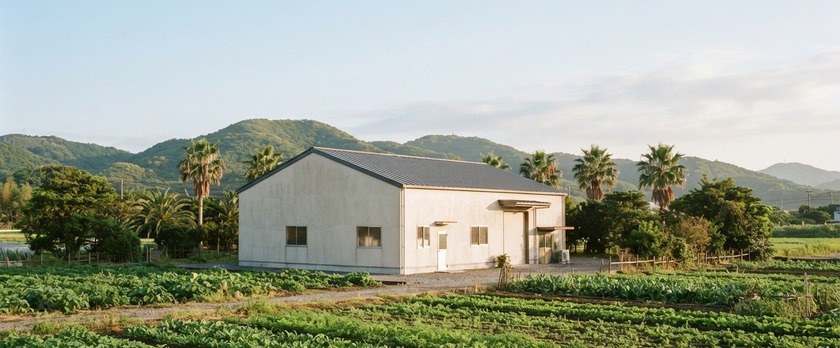
This published material does not include the number of illegal overstayers by prefecture. On the other hand, as of the end of June 2026, the number of Foreign Residents in Miyazaki Prefecture was 13,834, with approximately 60% in Technical Intern Training and Specified Skilled Worker categories, a higher proportion of individuals working under Technical Intern Training and Specified Skilled Worker Status of Residence than the national average (approx. 20%) (our firm’s article: “Miyazaki’s Foreign Residents Total 13,834 | 2nd Highest Growth Rate Nationwide“).
Nationwide, 746 new cases of individuals transitioning from Technical Intern Training to illegal overstay were identified in six months. For businesses within the prefecture that accept Technical Intern Trainees and Specified Skilled Workers, it is crucial to incorporate the following two points into their daily management:
The Employment for Skill Development Program (ESD) will begin on April 1, 2027, and the statutory penalty for the Crime of Aiding Illegal Employment will also be raised. Precisely because this is a period of system transition, it is reassuring to establish internal procedures for Residence Card verification.
In the published data table, the numbers as of January 1 are shown from Heisei 9 to Reiwa 7, and for Reiwa 8, two points in time are shown: as of January 1 and as of July 1. The number as of July 1 was published on October 16, 2026, as a press release by the Immigration Services Agency.
If an application for extension (or change) is filed by the expiration date, you can remain in Japan under your current Status of Residence until either the decision is made or two months have passed from the expiration date, whichever comes first (Special Grace Period). Applications filed after the expiration date are not eligible (those with a Period of Stay of 30 days or less are not eligible for the Special Grace Period).
The published material of October 16, 2026, does not include numbers by prefecture. Numbers by nationality/region and by Status of Residence are provided.
If you wish to return to your home country and meet the requirements, there is a procedure to voluntarily appear and apply for an order to depart. The period of denial of Landing for those who depart under an order to depart after voluntarily appearing is generally 1 year, which is shorter than deportation (generally 5 years). Including cases where you wish to remain in Japan, the available options vary depending on the circumstances, so please consult us as soon as possible.
Visual inspection of the card face alone may not be sufficient to detect counterfeiting or alteration. The Immigration Services Agency advises to verify the IC chip information using the Residence Card Reader App, and also to use the expiration information inquiry. Since the new format Residence Cards do not display the Period of Stay on the card face, verification with the app is particularly important.
As of July 1, 2026, the number of overstayers was 65,229, a 4.8% decrease in six months. Thailand became the top country. While Technical Intern Training decreased by 15.0%, Designated Activities and Student Status of Residence increased. For foreign nationals, the best preventive measure is to apply for extension or change of Status of Residence before the expiration date (Special Grace Period). For businesses, assuming that the new Residence Card format does not display the Period of Stay on the card face, it is advisable to establish internal procedures for verification using a Residence Card Reader App and by inquiring about invalidation information.
💴 Support fees for Extension of Period of Stay and Change of Status of Residence are listed on our “Fee Schedule“. The first consultation of up to 60 minutes is free.
As an Administrative Scrivener Corporation in Miyazaki City, Miyazaki Prefecture, our office assists with the management of Status of Residence expiration dates and Status of Residence procedures for foreign national employees.
For procedures that can be filed online, such as applications for a Certificate of Eligibility, change of status of residence and extension of period of stay, we accept requests from clients nationwide. Meetings are held online (Google Meet, LINE) and documents are exchanged by mail or electronically, so there is no need to visit our office. Applications for Permission for Permanent Residence and for Permission of Naturalization cannot be filed online and must be submitted at the counter, so they are limited to residents of Miyazaki Prefecture. Depending on the procedure and its urgency, you may need to collect your Residence Card at the counter of the immigration office covering the area where you live. Online applications cannot be filed on the last day of your period of stay, so please consult us as early as possible.
Please feel free to use our free consultation service first.
📞 To book a phone consultation: 0985-68-0851
Before you submit, let us take a look.
Free Immigration Pre-Submission Check ›
For those who will apply for a status of residence at the Immigration Services Bureau by themselves. Before you submit, we check your application form and supporting documents and tell you about any missing documents and points to watch. We accept checks online (Google Meet, about 20 minutes) or via LINE.
・Eligible: applications for a Certificate of Eligibility, change of status of residence and extension of period of stay (applications for permanent residence are accepted only from residents of Miyazaki Prefecture). Naturalization is not covered.
・Online (Google Meet): once per application. Replies via LINE: available for the same application until you submit it.
・Our guideline for replies via LINE is, in principle, within 2 business days (we are closed on Saturdays, Sundays and public holidays; replies may take longer when we are busy).
・Please send copies of your documents by LINE or email. For your residence card, send the front side only; please do not send the side showing your My Number.
・What we tell you is our office’s opinion. It does not guarantee approval; the outcome depends on the decision of the Immigration Services Bureau.
・We only point out missing documents and points to watch. We do not prepare or rewrite your application documents for you or draft text for them, and we do not tell you whether your application is likely to be approved (if you would like to engage us, we will introduce the Self-Prep Course, the Light Plan and the Standard Plan).
・If we find that a document contains information that is not true, or that the application is not your own (or a family member’s), we will decline the check.
This article is based on publicly available information as of October 2026. Details of the system and implementation dates may change in the future. For actual applications, please refer to the official information from the Immigration Services Agency or contact our office.
Author of this article: Administrative Scrivener Authorized to File Applications, Satoshi Nakayama
Representative, Administrative Scrivener Corporation Miyazaki International Legal Office
Location: Miyazaki City, Miyazaki Prefecture